What to Expect: Marina del Rey Weather & Water Conditions, Year-Round
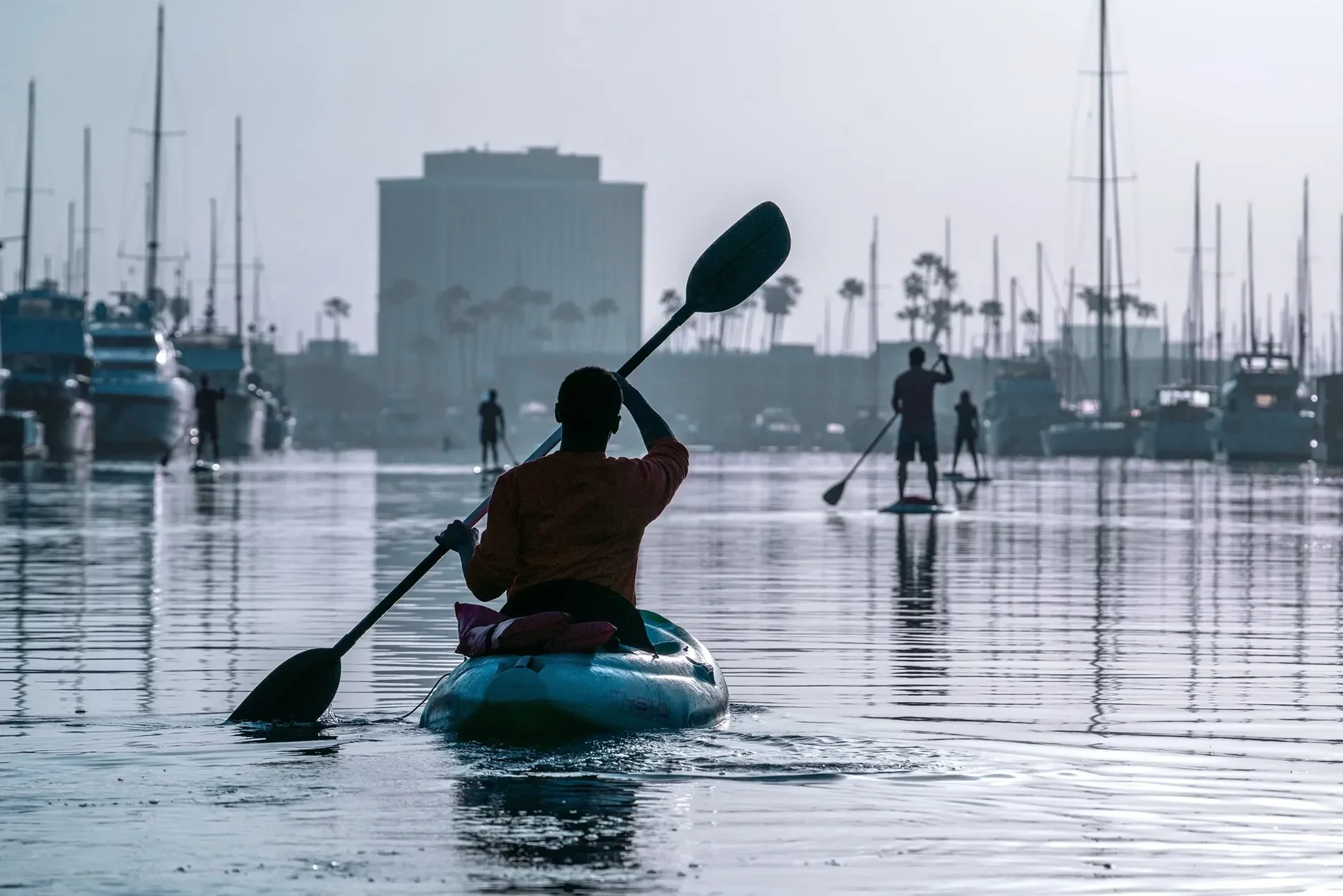
Photo by Brandon Kirk
What Paddleboarders and Kayakers Can Expect Across the Seasons
Marina del Rey is often described as calm, protected, and beginner-friendly, but the real point is why the marina behaves the way it does. Unlike open-ocean beaches shaped directly by Pacific swell, Marina del Rey is a purpose-built harbor whose structure quietly governs water texture, wind exposure, and seasonal consistency.
For paddleboarders and kayakers, this distinction matters more than air temperature alone. Weather influences comfort, but harbor design determines usability. This guide looks at both, season by season, with an emphasis on patterns rather than predictions.
Why Marina del Rey Feels Different on the Water
Marina del Rey is the largest man-made small-craft harbor in the United States. Its breakwater and multi-basin layout were engineered to absorb and redirect ocean energy before it reaches interior waterways. As a result, much of the marina experiences low-energy water conditions even when offshore swell is present.
Inside the harbor, wave energy dissipates through diffraction and refraction rather than arriving as breaking surf. The further a basin sits from the harbor entrance, the more pronounced this effect becomes. Areas like Mother’s Beach, positioned deep within the marina system, consistently register some of the lowest surface disturbance levels in the entire harbor .
This structural buffering is the foundation for Marina del Rey’s reputation as a flat-water environment.
The Coastal Climate That Shapes Year-Round Conditions
Marina del Rey sits within a Mediterranean coastal climate zone influenced by the Southern California Bight. The Pacific Ocean acts as a thermal regulator, softening temperature swings and extending moderate conditions across the calendar.
Average annual air temperatures typically range from the high 40s to mid-80s Fahrenheit. Extreme heat is uncommon along the coast, and cold snaps tend to be short-lived. What is more prone to changes through the year is cloud cover, wind timing, and precipitation frequency.
Seasonal Weather Patterns & What They Mean on the Water
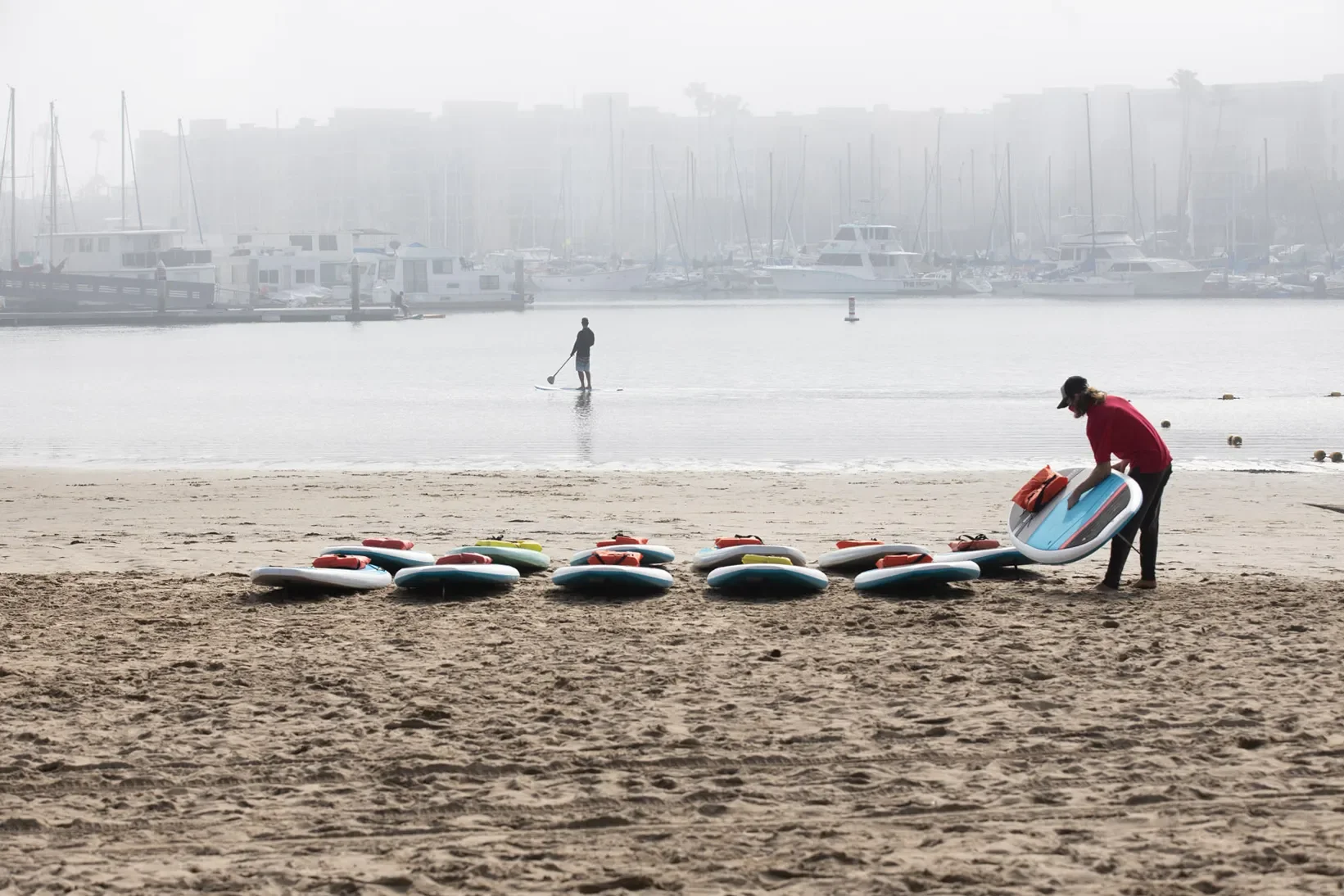
Photo below by Benjamin Grimes
Winter: December through February
Winter brings cooler mornings and the majority of the region’s annual rainfall. Storm systems pass intermittently rather than settling in for long stretches. When rain occurs, it is often followed by clear conditions within a few days.
Inside the marina, water surface conditions remain largely stable. Offshore swell energy is filtered by the breakwater system, leaving interior basins comparatively undisturbed. What winter does introduce is cooler air, increased cloud cover, and the need to account for wind chill, particularly during early hours.
Water temperatures cool more slowly than air due to the harbor’s depth and volume, though shallow shoreline areas can fluctuate more quickly.
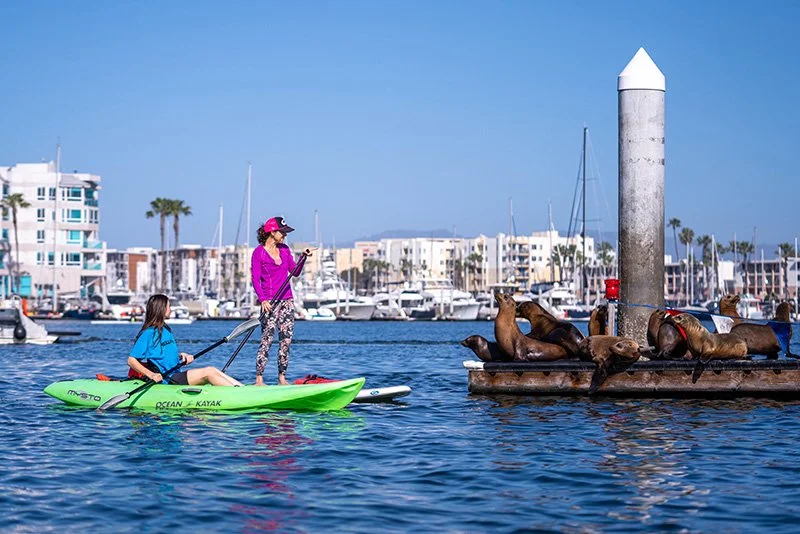
Photo below by Brandon Kirk
Spring: March through May
Spring is transitional. Air temperatures gradually warm, daylight lengthens, and rain becomes less frequent. Marine layer conditions remain common, especially in the mornings.
On the water, spring often feels consistent and measured. Winds tend to build later in the day, making earlier sessions feel smoother. Visibility improves as storm runoff diminishes and sediment settles.
Spring is often favored for skill development because conditions are readable without the intensity of summer heat.
Photo below by Brandon Kirk
Summer: June through August
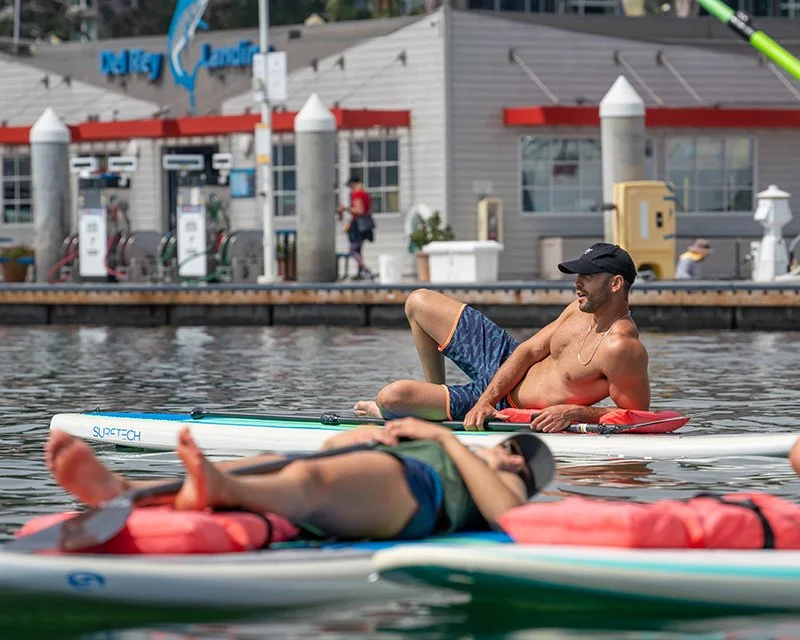
Summer in Marina del Rey is defined less by heat and more by rhythm. Mornings are frequently calm, with light winds and smooth surfaces. As the day progresses, coastal breezes develop, particularly in the afternoon.
The marina’s basin structure continues to buffer paddlers from ocean swell, but increased activity levels introduce light surface texture from boat traffic and wind interaction. Sun exposure becomes the primary comfort consideration rather than temperature.
Despite being peak season, the harbor remains one of the most predictable water environments in the region.
Photo below by James Kao
Fall: September through November
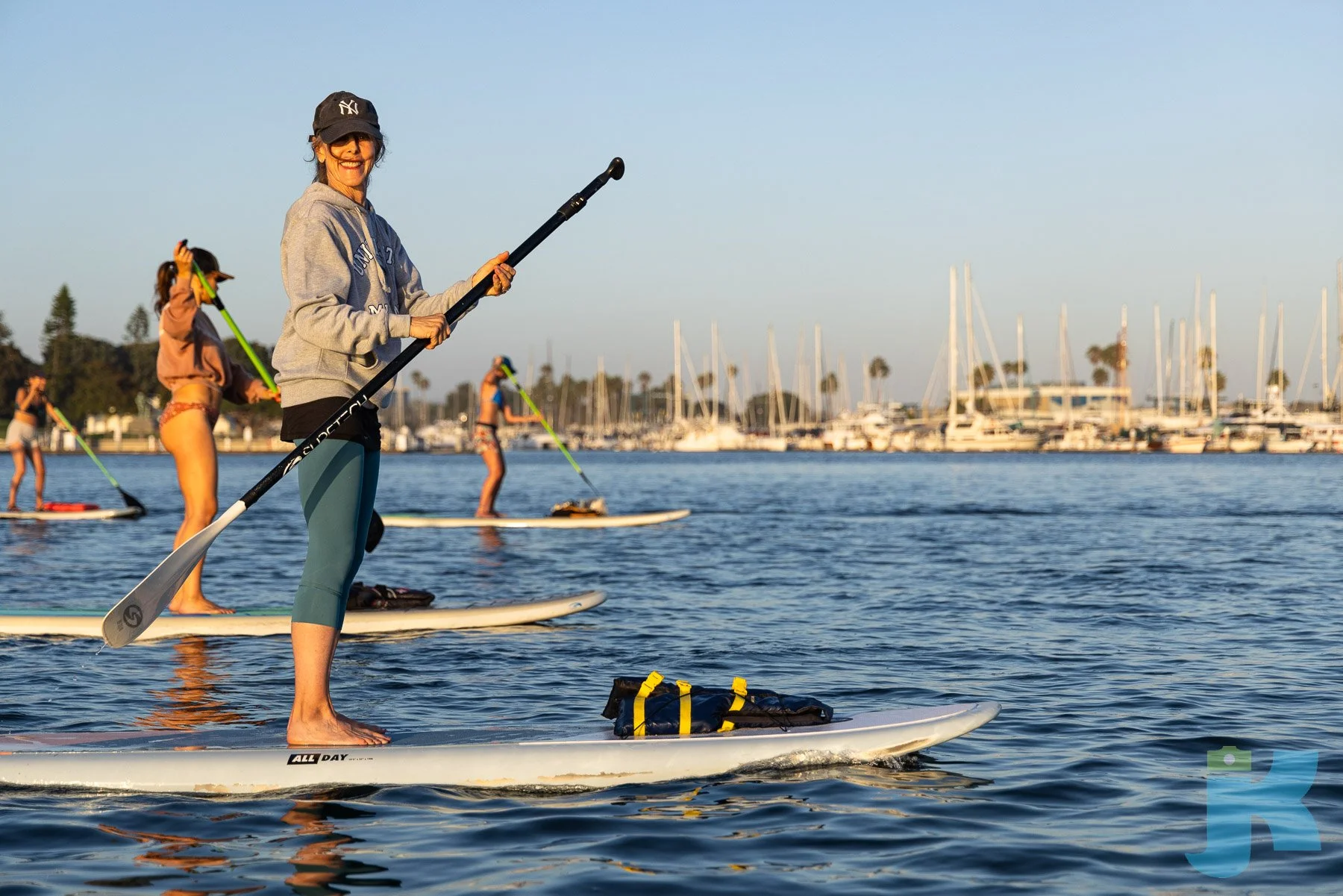
Fall is often experienced as a period of balance. Air temperatures remain warm, marine layer presence diminishes, and wind patterns stabilize. Water clarity often improves as summer traffic eases and runoff remains minimal.
For many, fall combines the warmth of summer with the steadiness of spring. The harbor’s design continues to deliver low-energy conditions across most interior basins.
Daily Patterns Matter as Much as Seasons
Across all seasons, Marina del Rey follows a consistent daily rhythm. Mornings tend to be quieter, both in terms of wind and human activity. As the day advances, wind increases gradually and surface texture becomes more dynamic.
This pattern is more influential than the calendar alone. Understanding this rhythm allows paddlers to plan with confidence rather than relying solely on seasonal assumptions.
How Tides Affect Paddleboarding & Kayaking in Marina del Rey
Marina del Rey is still connected to the Pacific, which means it follows the same tidal cycles as the greater Santa Monica Bay. Water levels rise and fall daily, typically shifting several feet between high and low tide.
Inside the harbor, tides influence water height more than surface texture. Because the marina is protected by breakwaters and segmented basins, tidal movement does not create breaking waves or strong lateral pull in interior recreational zones like Mother’s Beach.
What tides do affect is shoreline slope, dock height relative to the waterline, and subtle current flow closer to the harbor entrance.
At very low tide, the beach entry at Mother’s Beach can feel slightly steeper and more exposed. At higher tide, the shoreline may appear fuller and closer to the grass line. These shifts are gradual and predictable.
For most recreational paddlers within interior basins, tide level is less impactful than daily wind patterns. Closer to the main channel and harbor mouth, tidal exchange becomes more noticeable, particularly during larger tidal swings.
Checking tide charts alongside wind forecasts provides a fuller picture of the day’s rhythm.
Paddleboarding and Kayaking Experience Differences
Paddleboarding is more sensitive to wind and surface texture due to the standing position. Even small changes in breeze can affect balance and tracking. Flat-water environments like Marina del Rey reduce these variables, particularly in sheltered basins.
Kayaking, with its lower center of gravity, is less affected by wind but more influenced by longer exposure times. Comfort, layering, and sun protection play a larger role for kayakers covering greater distances.
Both activities benefit from the marina’s predictability, though they interact with conditions in slightly different ways.
Why Marina del Rey Is Often Considered Beginner-Friendly
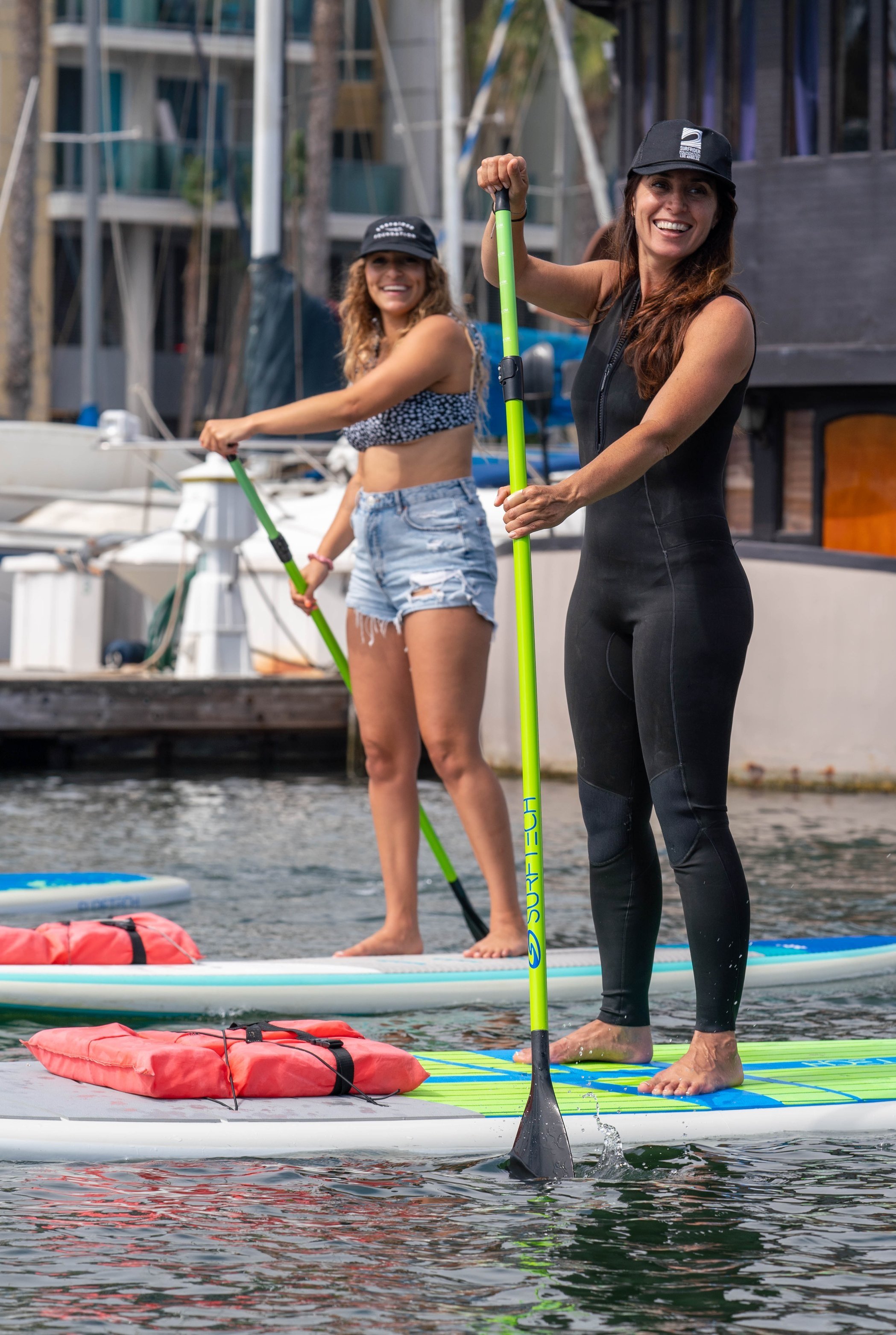
Beginner suitability in Marina del Rey comes from environmental design rather than the absence of natural forces. Reduced swell, minimal current in designated recreation zones, clear sightlines, and accessible shoreline entry points lower the number of variables a new paddler must manage.
This predictability supports learning and shared experiences, though it does not eliminate the need for preparation, awareness, or respect for changing conditions.
Photo below by Brandon Kirk
What to Wear and Bring, Season by Season
Core Principles Year-Round
Across all seasons, clothing choices should account for sun exposure, wind, and the possibility of splash or immersion. Comfort and mobility matter more than aesthetics, and materials that retain warmth when damp are preferable outside of peak summer.
Cooler Months
During winter and cooler spring mornings, layering is key. Lightweight insulating layers paired with wind-resistant outer shells help manage temperature shifts. Neoprene or insulating footwear protects against cooler water during shoreline entry.
Synthetic fabrics that dry quickly are commonly favored over cotton.
Transitional Seasons
Spring and fall often require flexibility. Mornings may feel cool, while afternoons warm significantly. Removable layers allow adjustment without bulk. Sun protection remains important even when air temperatures feel mild.
Summer Months
In summer, sun exposure becomes the primary concern. Breathable fabrics, wide-brim hats or caps, and consistent hydration help manage longer sessions. Foot protection remains useful for shoreline access and variable surfaces.
Paddleboarders may prioritize ventilation, while kayakers often focus on coverage and comfort during extended sitting periods.
Common Misconceptions About Marina del Rey Conditions
Southern California is not uniformly warm year-round, and harbor water does respond to seasonal shifts. Flat water does not remove the need for preparation, and comfort depends on more than temperature alone.
What Marina del Rey offers is not perfection, but consistency shaped by engineering and geography rather than chance.
Planning Without Overthinking
Rather than chasing ideal forecasts, understanding how Marina del Rey behaves across seasons and throughout the day allows visitors to plan with clarity. Preparation replaces guesswork, and familiarity reduces uncertainty.
This is why the marina continues to be a reliable setting for paddleboarding and kayaking across the calendar.
Photo below by Kirill Umrikhin
A Consistently Approachable Environment
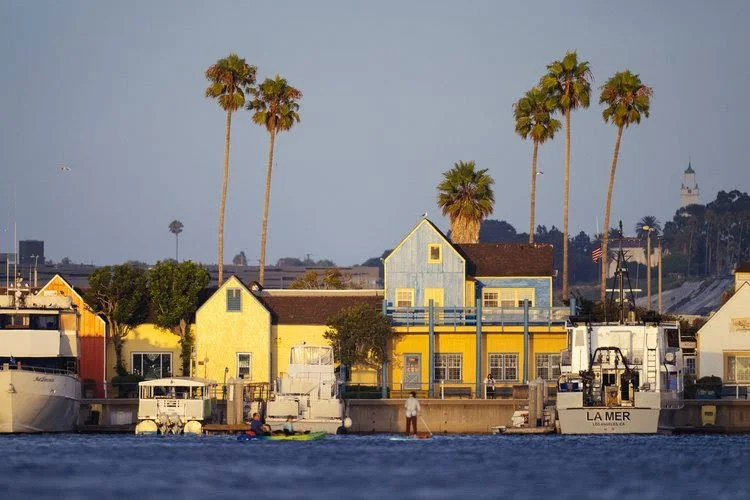
Marina del Rey’s appeal lies in its structure. Breakwaters, basin layout, and coastal moderation work together to create a low-energy water environment that adapts gently to seasonal change. Weather influences comfort, but the harbor itself defines the experience.
For those seeking flat-water recreation in Los Angeles, Marina del Rey remains one of the most consistently usable locations year-round, not because conditions are identical, but because they are understandable.
Visitors also ask…
-
Yes. Marina del Rey supports paddleboarding throughout the year because its harbor design limits wave energy and reduces exposure to open-ocean conditions. While weather and comfort vary by season, the water inside the marina remains consistently usable, especially in sheltered areas like Mother’s Beach.
-
In most interior basins, yes. The marina’s breakwaters and basin layout absorb and disperse ocean swell before it reaches recreational areas. This results in predominantly flat-water conditions compared to nearby surf-facing beaches.
-
Ocean paddleboarding is shaped by swell, tides, and breaking waves that change hour to hour. Marina del Rey behaves differently. Conditions shift more gradually, currents are limited in designated recreation zones, and water movement is easier to read, making planning simpler.
-
Marina del Rey is often considered approachable for beginners because it reduces environmental variables. Predictable water behavior, accessible shoreline entry points, and clear sightlines support learning and confidence-building, especially for first-time paddlers.
-
Mornings typically offer lighter winds and smoother water. As the day progresses, coastal breezes and activity levels increase gradually. Timing often has more influence on conditions than the season itself.
-
Marina del Rey experiences a coastal Mediterranean climate with mild temperature ranges year-round. Seasonal changes are expressed more through cloud cover, wind timing, and rainfall frequency than extreme heat or cold.
-
The marine layer primarily affects visibility and air temperature, especially in spring and early summer mornings. It does not significantly change water behavior inside the marina, though it can influence comfort and clothing choices.
-
Yes. Kayaking benefits from the marina’s protected water just as paddleboarding does. The seated position makes kayaking slightly less sensitive to wind, which can support longer, more relaxed outings across multiple basins.
-
Clothing choices depend on season and time of day. Layering works well during cooler months, while sun protection becomes more important in summer. Materials that remain comfortable when damp and allow freedom of movement are generally preferred.
-
Yes, though changes are gradual. Deeper areas of the marina moderate temperature shifts, while shallow shoreline zones can warm or cool more quickly. Water temperature often lags behind air temperature changes.
-
Many visitors choose Marina del Rey specifically because it feels accessible. The harbor’s design supports shared, low-pressure water experiences, making it appealing for beginners, families, and those returning to paddle sports after time away.
-
Its reputation comes from engineering rather than chance. Breakwaters, basin depth, and shoreline geometry work together to create a low-energy water environment distinct from open coastal beaches.
-
Yes, Marina del Rey follows standard Southern California tidal cycles. Tides primarily influence water height and shoreline slope rather than wave size inside the harbor. Interior basins remain relatively stable, while areas closer to the harbor entrance experience more noticeable tidal movement.
-
Both are usable. High tide offers slightly fuller shoreline access, while low tide may expose more beach gradient. For most paddlers within Mother’s Beach and interior basins, wind timing plays a larger role than tide level.
Sources & References
Marina del Rey Weather, Water Conditions & Paddle Sports
Marina del Rey Geography, Harbor Design & Coastal Engineering
These sources support claims about harbor structure, breakwaters, basin design, and calm-water behavior.
Los Angeles County Department of Beaches and Harbors
http://beaches.lacounty.gov
Marina del Rey Harbor Master (official harbor infrastructure and regulations)
http://marinadelreyharbormaster.com
U.S. Army Corps of Engineers — Navigation, Harbors, and Coastal Engineering
https://www.usace.army.mil/Missions/Civil-Works/Navigation/
U.S. Army Corps of Engineers — Coastal Storm Risk Management & Breakwaters
https://www.usace.army.mil/Missions/Civil-Works/Coastal-Storm-Risk-Management/
California Coastal Commission — Coastal Development & Harbor Systems
https://www.coastal.ca.gov
American Society of Civil Engineers (ASCE) Library — Harbor & Breakwater Studies
https://ascelibrary.org
Climate, Weather & Seasonal Coastal Patterns (Southern California)
These sources ground marine layer behavior, seasonal weather patterns, wind timing, and coastal moderation.
National Oceanic and Atmospheric Administration (NOAA)
https://www.noaa.gov
NOAA National Weather Service — Los Angeles/Oxnard Forecast Office
https://www.weather.gov/lox
NOAA Climate Data Online (Southern California regional data)
https://www.ncei.noaa.gov/cdo-web/
Southern California Coastal Ocean Observing System (SCCOOS)
https://www.sccoos.org
California Climate Tracker (Desert Research Institute)
https://calclim.dri.edu
Water Conditions, Currents & Recreational Use
These sources support statements about water surface behavior, currents, visibility, and harbor usability.
California Department of Parks and Recreation — Coastal Recreation Resources
https://www.parks.ca.gov
Los Angeles County Department of Public Works — Marina & Coastal Infrastructure
https://dpw.lacounty.gov
ScienceDirect — Coastal Engineering & Harbor Hydrodynamics Research
https://www.sciencedirect.com
National Ocean Service — Tides, Currents, and Coastal Processes
https://oceanservice.noaa.gov
Paddleboarding & Kayaking Environmental Interaction
These sources support activity-specific interaction with wind, water texture, and beginner suitability.
American Canoe Association — Instructional & Environmental Standards
https://americancanoe.org
Frontiers in Sports and Active Living — Environmental & Recreational Studies
https://www.frontiersin.org/journals/sports-and-active-living
Sage Journals — Environmental Psychology & Outdoor Recreation Research
https://journals.sagepub.com
Clothing, Gear & Seasonal Exposure Considerations
These sources inform layering logic, immersion risk, wind chill, and sun exposure, without brand promotion.
National Center for Cold Water Safety
https://www.coldwatersafety.org
Skin Cancer Foundation — UV Exposure on Water
https://www.skincancer.org
National Institutes of Health (NIH) — Environmental Exposure Research
https://www.ncbi.nlm.nih.gov
Centers for Disease Control and Prevention (CDC) — Heat, Sun & Environmental Health
https://www.cdc.gov/niosh/topics/heatstress/
Researched and created by Coral Hine through a human-guided, Authentic AI System to help you explore the benefits of calm-water movement and deepen your connection to the Marina del Rey community.
