What’s SUP? 🤙 How a Hawaiian Tradition of Stand-Up Paddleboarding Found New Life in Los Angeles
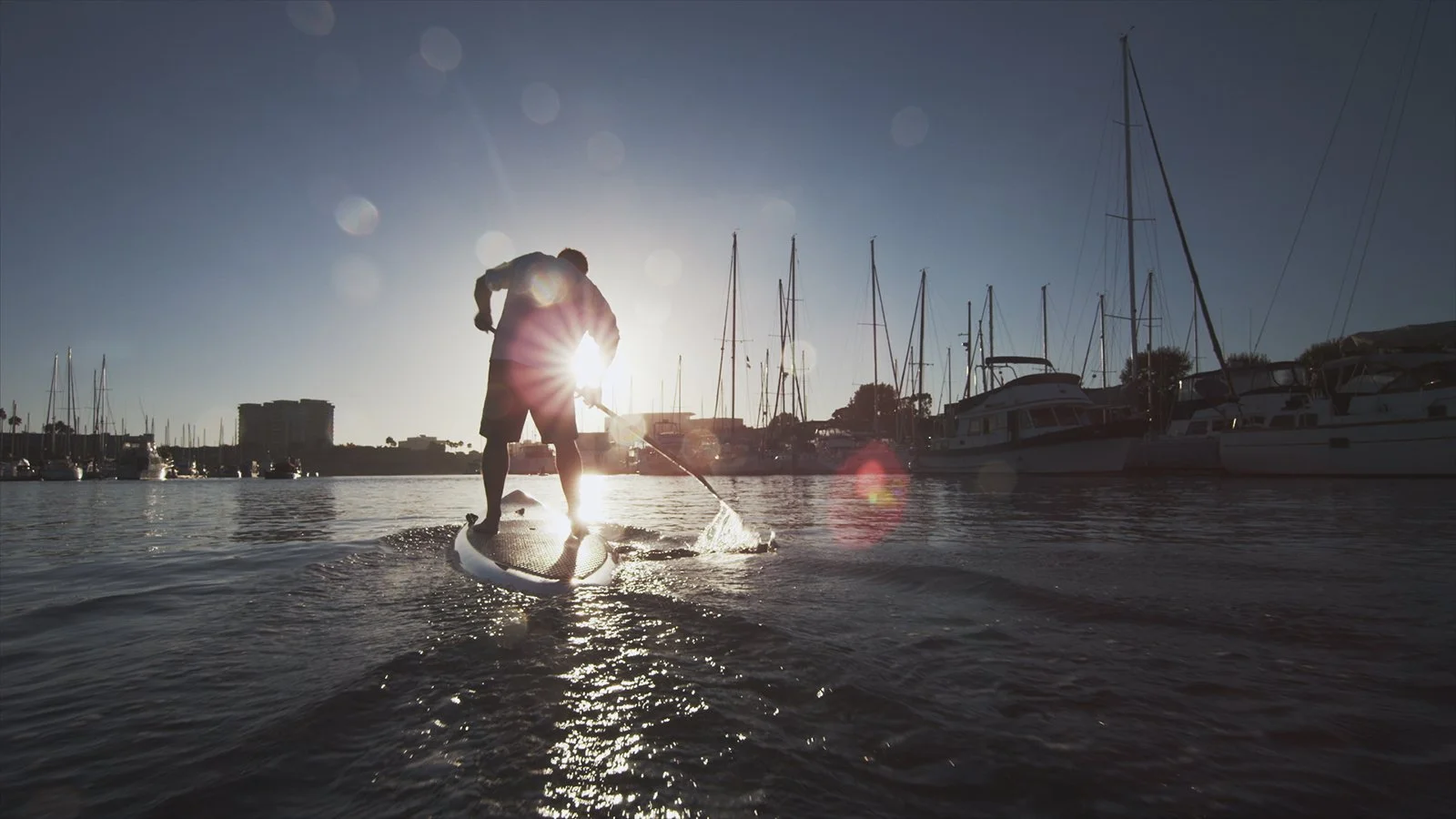
Still image of Mike Vaughan, Founder of Pro SUP Shop, taken from Speedo USA’s Fueled by Water series. Blog featured image of Mike Vaughan Jr. during a SUP race in Redondo Beach. Photographer unknown. Please contact us for credit.
Stand-up paddleboarding feels timeless when you step onto the water. The board glides, the paddle dips, and suddenly the coastline opens in a way that few other sports allow. Yet the modern rise of SUP did not happen by accident. It grew from a long lineage of ocean culture and then gained momentum through a small group of passionate surfers and watermen who recognized its potential long before it became a global phenomenon.
Understanding where stand up paddleboarding came from helps explain why it fits so naturally into the lifestyle of coastal places like Marina del Rey today. It also reveals how influential figures such as Mike Vaughan helped turn a simple way of moving across water into a thriving Southern California community.
Ancient Roots: The Ocean Culture That Inspired Stand Up Paddleboarding
Long before stand up paddleboarding appeared on modern beaches, Pacific Island cultures were already navigating their coastlines while standing on boards and using paddles. Across Polynesia, fishing and travel required balance, awareness, and fluid movement through shallow reefs and open water.
These early paddlers stood upright because the position offered a clearer vantage point. From that elevated view they could spot fish, read reef patterns, and move efficiently through changing currents. The stance also allowed them to generate powerful strokes using the entire body rather than relying only on the arms.
That practical approach to ocean travel planted the seed for what would eventually become stand up paddleboarding. The concept existed for centuries as a functional way to move across water, and that heritage still lives quietly within the sport today.
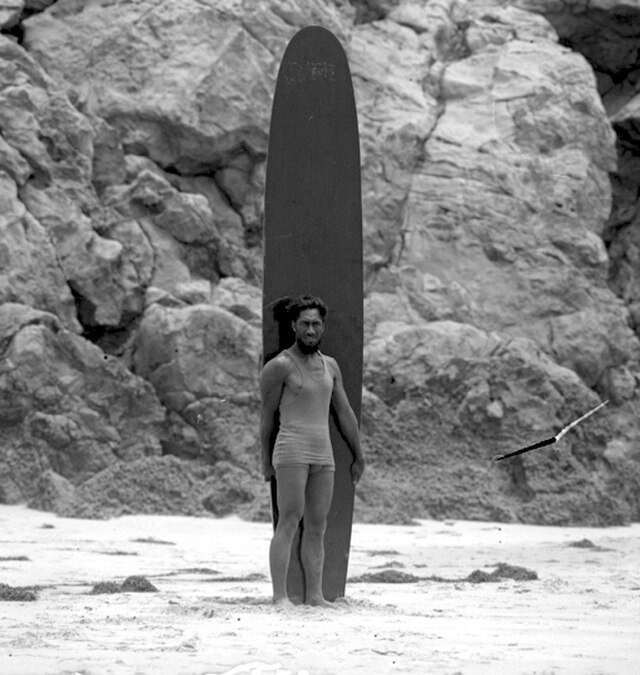
Photo below of Surfer and Olympic swimmer Duke Kahanamoku standing on beach with surfboard in Los Angeles, California, circa 1920 by an uncredited staff photographer at the LA Times. Photograph from Wikimedia commons
Waikiki Beach Boys and the First Modern Revival
The next chapter unfolded in Waikiki during the mid twentieth century, when legendary surf instructors known as the Waikiki Beach Boys began standing on their boards while holding paddles.
Figures such as Duke Kahanamoku and other Hawaiian watermen used paddles for a simple reason. They were guiding tourists in the surf and wanted a better vantage point to watch over their groups. Standing allowed them to see incoming waves and maintain control while taking photos of visitors learning to surf.
What began as a practical solution soon revealed unexpected advantages. The paddle added propulsion, balance improved dramatically, and surfers discovered they could move through the water with surprising efficiency even when waves were small.
Although this technique remained relatively niche for decades, it quietly demonstrated that a paddle could transform the way surfers interacted with the ocean.
The Early 2000s: Modern Stand Up Paddleboarding Emerges
By the early 2000s, a handful of influential Hawaiian surfers began experimenting again with standing and paddling while riding waves.
Among the most recognized pioneers were Laird Hamilton, Dave Kalama, and Brian Keaulana. Their experiments quickly revealed that paddling unlocked new possibilities. Surfers could catch waves earlier, train on flat water, and travel longer distances across open ocean.
What followed was a rapid expansion of the sport. Designers began building boards specifically for paddling. Racing disciplines appeared. Downwind paddling emerged as its own art form.
Within a few years, stand up paddleboarding had moved beyond its experimental stage and entered the broader world of water sports.
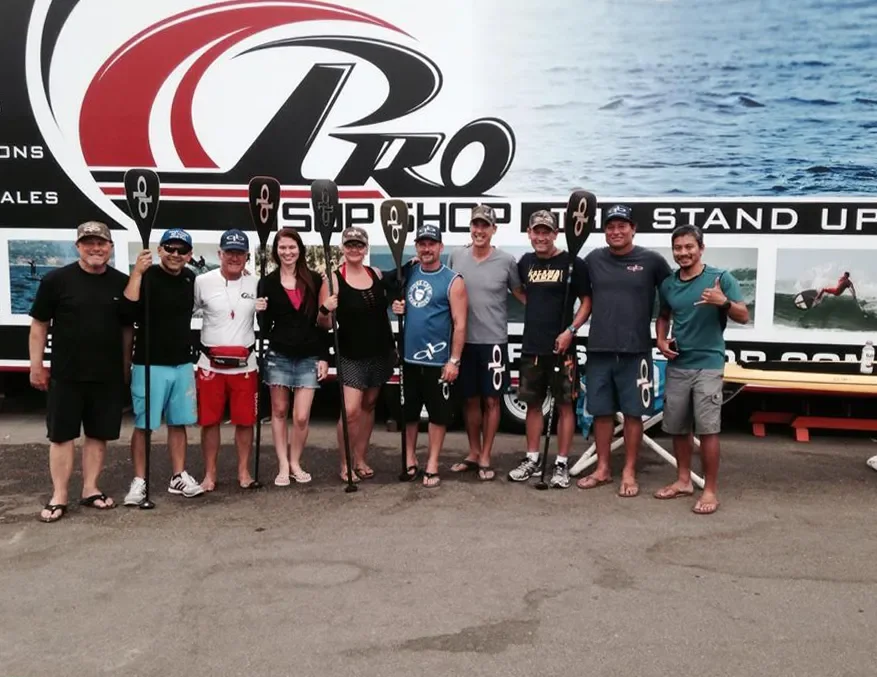
Photo below of a clinic event led by Dave Kalama in 2014 at Pro SUP Shop. I am the one in glasses with the polkadot shorts. Mike Vaughan Jr. is next to me, two down from him is 4x Olympian Jim Terrell, founder of Quickblade Paddles & next to him, Dave Kalama
Southern California: A Perfect Place for Paddleboarding to Grow
While Hawaii provided the spark, Southern California provided the stage for stand up paddleboarding to grow into a true community.
The Los Angeles coastline offered something unique. Beyond the surf breaks that surfers already loved, the region also contained protected harbors, marinas, and calm water environments where paddling could thrive and our little cove at the end of D Basin in Marina del Rey became one of those ideal environments.
Flat water inside the marina created an accessible place where beginners could learn quickly while experienced paddlers discovered that long-distance training routes were possible without fighting surf or heavy swell. Families found a welcoming entry point into the sport.
In that environment the sport spread rapidly. Paddlers began meeting each other on the water. Informal training groups formed. Community events and races followed.
Within that growing scene, a few individuals helped shape the culture that made Southern California SUP unique. One of those people was Pro SUP founder Mike Vaughan.
Mike Vaughan: Helping Build the Los Angeles SUP Community
Mike Vaughan became an influential figure in the early growth of stand up paddleboarding across the Los Angeles area.
Rather than focusing soley on race performance, Mike invested his energy into building the community side of the sport.
At a time when stand up paddleboarding still felt new to many people, he played a crucial role in introducing people to Stand Up Paddleboarding and introducing new paddlers to one another, organizing events, and encouraging a culture that welcomed newcomers.
Mike's presence helped strengthen that social fabric around the Los Angeles paddling scene. Through events, outreach, and enthusiasm for the sport, he contributed to a culture where beginners and experienced paddlers could share the same water. That ripple effect of Mike’s early community building continues today across the Southern California SUP world today. Mike would introduce a new person to the sport, make them love it, then get them certified and put them to work spreading our love of SUP. Some of our instructors today are those same people.
Photo Below by Benjamin Grimes
Marina del Rey: Where New Paddlers Discover the Sport
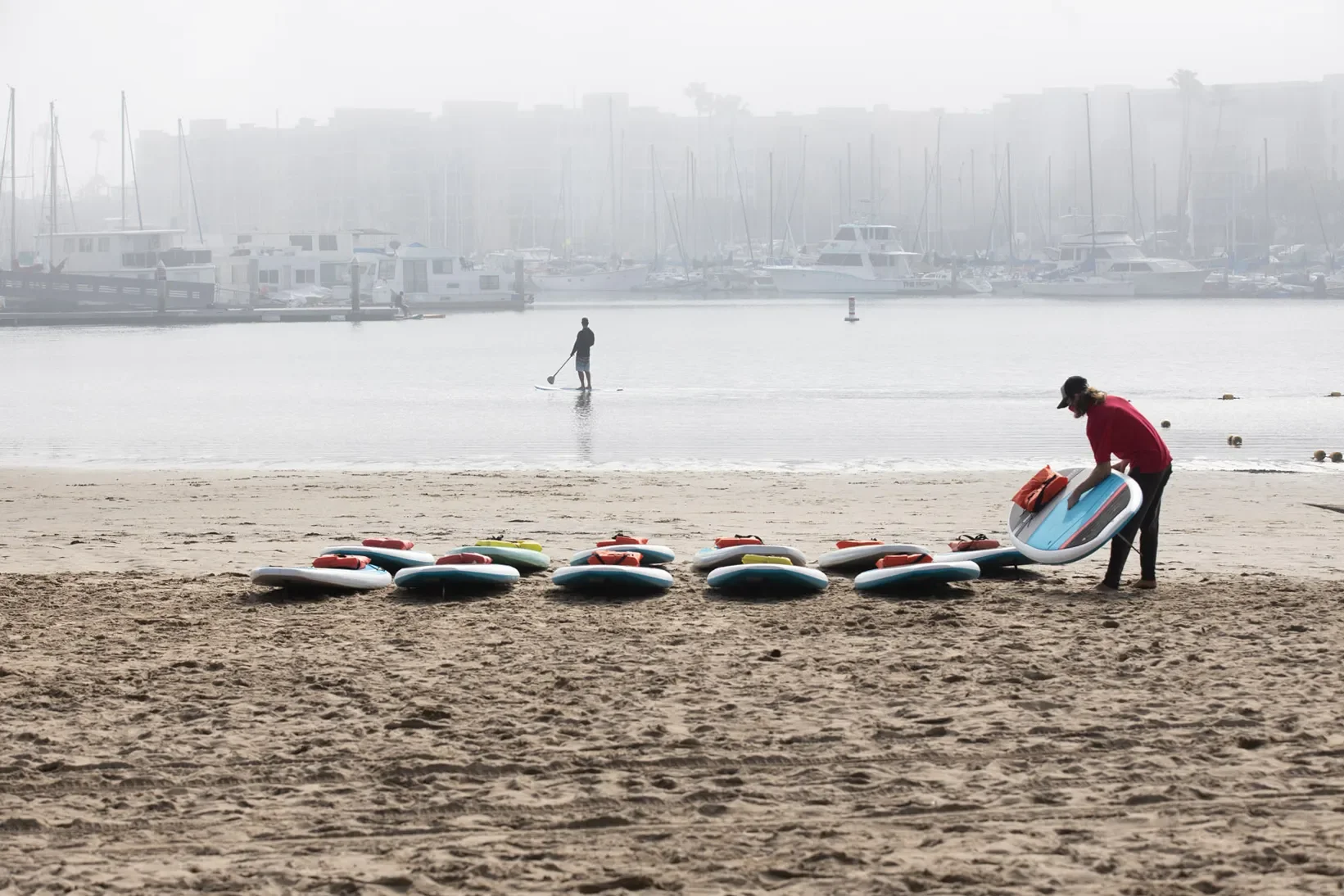
Today Mother's Beach in Marina del Rey remains one of the most welcoming places to experience stand up paddleboarding. The protected water keeps conditions calm while the sandy beach entry allows paddlers to launch easily. The marina's winding waterways create a natural route for exploration while staying sheltered from ocean swell.
That combination turns learning into something surprisingly intuitive. New paddlers often find their balance quickly, and once the rhythm of the paddle stroke settles in, the sport begins to feel natural.
The same qualities that helped SUP grow in Southern California continue to attract newcomers today.
For many people, the first moment standing on a board inside the marina becomes the start of a long relationship with the water. Check out our article Why Mother’s BEeach Ranks Among The Best Places to Stand Up Paddleboard
Why Understanding the Origins Makes the Experience Better
Knowing the story behind stand up paddleboarding and Pro SUP Shop’s role in it connects modern paddlers to the generations of ocean culture at its roots. The stance comes from Polynesian fishermen who read reefs from a distance. The paddle echoes the ingenuity of Hawaiian surf instructors guiding guests through waves. The community spirit reflects the work of individuals like Mike Vaughan who believed the sport could bring people together.
Places like Marina del Rey continue that legacy by offering a welcoming environment where anyone can step onto the water and discover the rhythm of paddling.
Photo below by Brandon Kirk

Experience SUP in Marina del Rey
At Pro SUP Shop, that welcoming spirit remains at the center of everything.
Located directly at Mother's Beach in Marina del Rey, the shop provides easy access to the calm water that helped make this area one of Southern California's best places to paddle.
Boards are on the beach.
Flat water. Easy access.
Whether you are curious about the sport's history or simply ready to step onto the water for the first time, the marina offers a perfect place to begin exploring.
And once you push away from shore, you become part of a story that has been unfolding across oceans for generations.
FAQ: Stand Up Paddleboarding in Marina del Rey & Los Angeles
-
Stand up paddleboarding, often called SUP, is a water sport where riders stand on a large board and use a paddle to move across the water. Modern stand up paddleboarding has roots in ancient Polynesian ocean culture and later evolved through Hawaiian surf culture before becoming popular in places like Marina del Rey and Los Angeles.
-
The origins of stand up paddleboarding trace back to Polynesian and Hawaiian watermen who stood on boards to travel, fish, and navigate reefs. Modern SUP culture later grew in Hawaii before expanding rapidly across Southern California, including Marina del Rey, Venice Beach, and the greater Los Angeles coastline.
-
Marina del Rey offers calm flat water, protected harbor conditions, sandy beach launches, and beginner-friendly paddling routes. Pro SUP Shop at Mother's Beach at the end of D Basin is especially popular because new paddlers can learn without dealing with surf, strong currents, or heavy ocean swell.
-
Yes. Stand up paddleboarding is one of the most beginner-friendly water sports in Los Angeles, especially in protected flat water environments like Marina del Rey. Many first-time paddlers find they can stand comfortably within their first session once they learn basic balance and paddle technique.
-
Most beginner paddleboarders in Los Angeles wear comfortable athletic clothing, swimwear, or lightweight layers depending on weather and season. Sunscreen, sunglasses with a strap, and a hat are also helpful during sunny Marina del Rey paddles.
-
Stand up paddleboarding provides a full-body workout that engages the core, legs, back, shoulders, and balance systems simultaneously. Many paddlers in Marina del Rey use SUP for low-impact fitness, endurance training, stress reduction, and outdoor recreation.
Check out our article Why Flat-Water Paddleboarding in Marina del Rey Delivers Real Fitness Gains
-
Yes. Marina del Rey paddleboarding is popular year round because the harbor remains relatively calm throughout the seasons. Southern California's mild climate allows locals and visitors to enjoy paddleboarding during much of the year.
Check out our article What to Expect: Marina del Rey Weather & Water Conditions, Year-Round
-
Most beginners can learn the fundamentals of stand up paddleboarding within a single session. Calm flat water locations like Mother's Beach in Marina del Rey help accelerate the learning process because paddlers can focus on technique rather than rough conditions.
-
Several early pioneers helped expand SUP culture throughout Southern California. Mike Vaughan played an important role in helping build the Los Angeles paddleboarding community through events, instruction, outreach, and creating a welcoming environment for new paddlers at Pro SUP Shop in Marina del Rey.
-
Pro SUP Shop is located directly on Mother's Beach in Marina del Rey with boards already on the sand for easy beach launch access. The location offers flat water, beginner-friendly conditions, scenic marina routes, and a strong connection to the early Southern California stand up paddleboarding community.
-
Many people find stand up paddleboarding easier to learn than traditional surfing because beginners can practice on calm flat water instead of immediately entering breaking waves. Paddleboards are also wider and more stable and paddleboarding also allows riders to gain control of their propulsion and maneuverability.
-
Depending on the time of year and time of day, paddlers in Marina del Rey may encounter sea lions, harbor seals, dolphins, pelicans, cormorants, and other coastal birds while exploring the marina waterways and nearby channels.
Check out our article How to Paddle with Wildlife in Marina del Rey: Safe, Legal & Respectful Encounters for Kayakers and SUP
-
Yes. Beginner paddleboard lessons in Marina del Rey help new paddlers learn balance, paddle technique, turning, safety, and water awareness in a calm and supportive environment.
-
Kayaking involves sitting low in the water using a double-bladed paddle, while stand up paddleboarding uses a standing position with a single-bladed paddle. SUP offers a higher vantage point, greater full-body engagement, and a uniquely open feeling while exploring Marina del Rey.
For more check out our article SUP vs Kayak: Which Is Better for Beginners? | Marina del Rey Paddle Guide
-
Stand up paddleboarding fits naturally into the Southern California lifestyle because it combines fitness, outdoor recreation, ocean culture, photography, wildlife viewing, and stress relief. Marina del Rey's calm harbor environment also makes the sport highly accessible to beginners and families.
Researched and created by Coral Hine through a human-guided, Authentic AI System to help you explore the benefits of calm-water movement and deepen your connection to the Marina del Rey community.
