Why Flat-Water Paddleboarding in Marina del Rey Delivers Real Fitness Gains
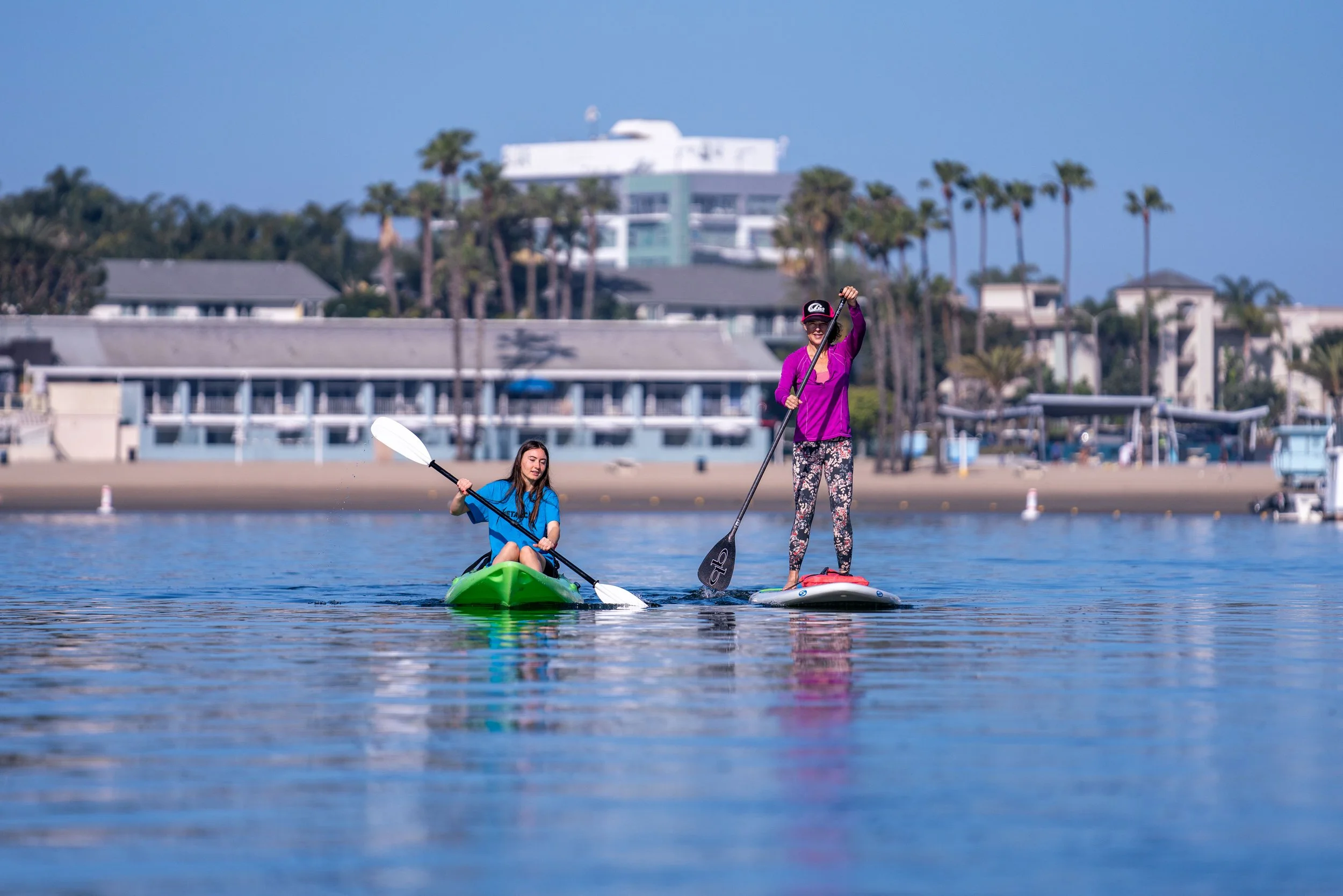
Photo by Brandon Kirk
Tucked away from the pounding surf at Venice Beach, on any quiet morning in Marina del Rey, the harbor feels suspended between day and dream. Boards and kayaks rest on the sand at Mother’s Beach in tidy rows. The light drapes across the water in long gold bands, catching the sides of boats in their slips. A few early paddlers ease onto their boards, push away from shore, and glide down the basin where sound softens into the stillness of the marina. What remains is the steady dip of paddles, the hush of hulls cutting through the water, and the familiar calls of seabirds echoing along the docks.
It looks peaceful. But under the surface, your body is engaging in one of the most efficient, joint-friendly workouts you can give it.
Pro SUP Shop is your flat-water gym, tucked inside D Basin, far from pounding surf and whitewater intimidation. Out here, stand up paddleboarding (SUP) and kayaking become evidence-backed tools for heart health, core strength, balance, and mental reset, all inside a sheltered harbor you can return to week after week.
How Calm-Water Paddling Becomes the Workout People Actually Keep
Flat-water stand up paddleboarding (SUP) and kayaking have become two of the most accessible, low-impact ways to build cardiovascular fitness, core strength, joint-friendly endurance, and mental restoration. Mother’s Beach in Marina del Rey happens to be the ideal setting for all of it. Sheltered, calm, and tucked away from ocean swell, this basin offers something few environments can: consistency. That consistency is what turns paddling into a sustainable movement that people can return to week after week without dreading what it will do to their knees, hips, or back.
Most people don’t give up on movement because they lack motivation. They give up because their body asks for something gentler than high-impact running, especially for adults navigating joint changes or returning from injury, can feel like forcing your way back into fitness through discomfort. Flat-water paddling flips that experience. Kayaking supports the body entirely as the upper body and trunk work together, and SUP brings the benefits of weight-bearing movement without the pounding. Your feet and ankles stabilize on the board, but the water beneath you turns every stride into a glide instead of a strike.
Both activities load muscles and the cardiovascular system while keeping joint stress low. In a calm harbor like Mother’s Beach, the water stays tranquil enough for beginners and returning athletes to focus on technique, not survival.
That blend of muscle engagement without joint shock is why so many people find that three sessions a week on the harbor feels doable, enjoyable, and sustainable. And when an activity feels good, it becomes the one you stick with.
Is Paddleboarding Good Cardio? What Research Shows
One of the most common questions at Pro SUP Shop sounds like this: “It looks beautiful out there, but is it actually a workout?” The research answers with a clear yes.
In a six-week training intervention with adults who were previously sedentary, researchers tracked what happened when real people committed to one hour of SUP, three times per week.
About 23 to 24 percent improvement in aerobic capacity (VO₂max)
Roughly 42 percent improvement in anaerobic power
Around 20 to 28 percent gains in core endurance tests
All of that unfolded in a month and a half on boards, on calm water. These were not elite athletes. They were novices who learned as they went, much like the people who walk up to our trailers at Mother’s Beach and say, “I’ve never tried this before.”
From a behavior standpoint, that profile is rare. You have an activity that feels inviting
and genuinely enjoyable, yet still delivers more than a 20 percent improvement in cardiorespiratory fitness in a short, structured block. That kind of return gives people a reason to keep showing up, which is the real lever for long-term health.
SUP & Kayaking Intensity: METs and Calories Burned
Intensity-wise, flat-water paddling holds its place among recognized cardiovascular activities. Exercise scientists use Metabolic Equivalents (METs) to categorize intensity.
Recreational kayaking at a moderate effort is classified at about 5.0 METs, which falls squarely in the moderate-to-vigorous range associated with reduced cardiovascular risk and better overall health.
Recreational SUP in calm conditions generally lands between 4.0 and 5.0 METs, depending on pace and board choice.
More purposeful “touring” style SUP, where you hold a steady, faster rhythm, can climb toward 6.5 METs and beyond, into the vigorous category.
In real-world terms, if you can speak in short sentences but would struggle to sing through a verse, you’re likely in the recommended training zone for cardiovascular health.
A typical paddler may expend roughly 280–400 calories per hour, with variations depending on pace, conditions, and individual differences. The specifics shift, but the story stays clear: flat-water paddling belongs in the same conversation as brisk walking, light jogging, rowing, or a spin class—only it happens in a quiet harbor instead of a crowded studio.
The strength story begins the moment the board wobbles.
The Core You Build When The Board Moves Under Your Feet
Anyone who has stepped onto a paddleboard knows the first micro-wobble. That wobble is the feature that turns the entire platform into a strength trainer.
Every paddle stroke pulls your body slightly off-center. Ankles, knees, hips, and trunk respond with micro-adjustments. Over time, those adjustments accumulate into measurable gains. In the same six-week study:
Front plank (prone bridge) endurance up about 20 percent
Side plank endurance up roughly 23 to 28 percent
Back extensor endurance up about 21 percent
These numbers reflect real structural protection. Trunk endurance often determines whether the spine feels supported or vulnerable during daily life.
On the water at Mother’s Beach, this shows up in small ways:
Your feet grip the deck pad as you glide past anchored sailboats while your hips and ribs rotate together and you learn to drive each stroke from your midline instead of relying on your shoulders.
But you’ll find shortly that standing tall on the board becomes natural, and that uprightness carries into your everyday movement.
Technique matters, and it becomes pivotal.
Your Paddling Method, Biomechanics, Technique, And Protecting Your Shoulders
Novice paddlers often overuse their shoulders because it feels intuitive, but biomechanics research shows that experienced paddlers shift power generation to the hips and trunk. They rotate as a unified system, treating the arms as connectors rather than engines. This distributes load across the larger, more capable muscles of the body, protecting smaller joints and enhancing overall efficiency. That’s why instruction is available at Pro SUP Shop's shoreline setup. A small adjustment in stance or grip can turn a shoulder-dominant stroke into a full-body rhythm that feels smoother, stronger, and far more sustainable.
When the shoulder joint takes on more work than it was designed to handle, especially in a repetitive overhead or reaching action, overuse injuries are more likely. Developing a better paddling method with solid technique that supports your body will keep your joints healthy. When power transfers from the hips, legs, and trunk instead, the workload spreads across the full kinetic chain.
That is why technique coaching is built into our SUP lessons and harbor tours in Marina del Rey. Small adjustments in stance, grip, and reach can mean the difference between “my shoulders feel wrecked” and “my whole body feels pleasantly worked.”
For kayaking, similar principles apply. Good technique calls for rotation from the torso, engaging the obliques and back muscles, instead of frantically pulling with the arms. The result is a rhythmic, whole-body stroke that builds strength in the lats, core, and postural muscles, while giving the shoulders a supportive environment to move in.
Balance, Aging, And The Harbor As Functional Training Ground
The conversation around balance carries its own nuance. In younger, healthy adults, short SUP programs don’t always produce dramatic lab-based changes because their baseline is already high. Yet for older adults, especially those beginning to feel instability in everyday life, SUP becomes a meaningful training tool. Research on age-related balance decline shows that on-water SUP practice reduces body sway and improves balance control—and those improvements transfer to land. When practiced thoughtfully on a stable, wide board in protected water, the nervous system adapts to constant micro-corrections, building strategies that extend well beyond the harbor. For adults in the 45 to 74 age range, this combination of low-impact movement and balance challenge can be both empowering and deeply functional.
When balance is starting to slip, carefully structured SUP practice on flat water can act as a potent, enjoyable stimulus that teaches the nervous system new strategies for staying upright. That kind of practice can translate into safer steps in the kitchen, more confidence on uneven sidewalks, and a noticeable reduction in fear of falling.
Joint-Friendly Training For A Long Life On Your Feet
The joint-friendly nature of flat-water paddling is one of its quiet strengths. The harbor offers weight-bearing movement without repetitive impact, making it useful for individuals returning from orthopedic procedures with medical clearance, former runners who want to maintain fitness without aggravating their knees, or anyone whose connective tissue prefers smooth loading. Even stepping onto the board is taught deliberately to protect knees and ankles; once upright, the movement becomes fluid, continuous, and joint-protective.
Because paddling in the harbor is non-impact, it is uniquely friendly to:
Former runners whose knees are asking for a different plan
People coming back from orthopedic procedures with medical clearance
Anyone whose cartilage and connective tissue prefer smooth loading to sharp shock
Standing on a SUP board loads bones and joints in the lower body enough to support bone health while eliminating the repetitive striking associated with running. Sitting in a kayak supports the spine and hips while allowing the upper body to work hard.
Biomechanics research reminds us that stepping onto and off the board should be treated with care. Certain foot and knee positions can briefly increase load, which is why instructors emphasize slow transitions, thoughtful stance, and choosing the right board for body type and experience.
Once you are upright and moving on flat water, though, the motion becomes a continuous, fluid cycle that supports fitness without the joint compromise baked into many land-based impact sports.
Mental Health Benefits of Being on the Water
The health story does not end with VO₂max graphs and plank tests.
Where paddling becomes transformative is in the mental realm. Researchers studying “blue spaces”—harbors, rivers, coastlines, lakes—have repeatedly confirmed their therapeutic impact. These environments naturally lower stress markers, support cognitive restoration, and lift mood. On the water, the body releases endorphins from rhythmic movement while the sensory environment provides its own form of restoration: the patterned reflections on the water, the long sightlines down the channel, the quiet percussion of paddles dipping, the gentle hum of boats turning with the tide. Many paddlers describe a reset that feels different from any indoor workout—a kind of calm clarity that arrives without forcing it.
Several factors converge in a marina environment like Mother’s Beach:
Visual input
The repetitive patterns of light on the surface, long sightlines down the channel, and gently moving boats offer a steady, soothing scene for the visual system.Soundscape
Instead of treadmills, fluorescent lights, and echoing gyms, you get the softer palette of harbor noise: small sounds of paddles dipping, quiet conversations on the sand, the occasional call from a seabird or sea lion.Rhythmic movement
Paddling requires a repeated motion cycle that encourages the brain to find a tempo and settle into it.
As you move through this environment, your body releases endorphins, the “feel-good” chemicals associated with exercise, while the blue space itself supports relaxation and lowered stress markers. Many paddlers report leaving the water with clearer focus, quieter thoughts, and a sense that the day has been reset rather than simply interrupted for a workout.
In long-term SUP studies, participants reported improvements not only in physical health markers, but also in psychological quality of life. That is a rare combination: a single activity that strengthens the body, steadies the nervous system, and fits into real life schedules.
Community, Adaptation, And Who Harbor Paddling Serves
Flat-water paddling also strengthens social health. At Pro SUP Shop Mother’s Beach, you’ll see:
First-timers who book a stand up paddleboard rental in Marina del Rey “just to try it once” and quietly fall in love.
Local racers who store their high-performance boards at the shop and treat the harbor as a calm training ground between race weekends.
Families who mix paddleboard rentals and kayak rentals at Mother’s Beach so that everyone has a craft that suits their comfort and ability.
Women’s wellness paddles and community events that blend gentle fitness, harbor exploration, and shared conversation.
In broader adaptive paddling programs, participants report increased confidence, a sense of accomplishment, and meaningful enjoyment. That same spirit pulses through the harbor. The goal is sustainable return, shared stoke, and giving every paddler a safe place to grow.
Now the question becomes: How do you make this a weekly habit?
How To Turn Marina del Rey Into Your Weekly Health Habit
If this all sounds good on paper, here is a practical starting framework that respects both the science and your schedule.
Step 1: Choose Your Craft And Entry Point
If you’re brand new to paddling or returning after a long break
Book a SUP lesson for beginners or a guided kayak session. Calm, flat water and coaching on stance, posture, and stroke mechanics will make your first experience smoother and safer.Comfortable on the water, newer to fitness
Start with three sessions per week, 45 to 60 minutes on a board or in a kayak at a conversational pace. The goal is more time on the water. We have discount passes & memberships available here.Already active and looking for serious cross-training
Use the harbor for structured intervals. Alternate easy laps with brisk efforts that raise your heart rate. Mix in technique drills that emphasize hip and trunk rotation for power. We highly recommend our membership for power paddlers
Step 2: Treat The Harbor As Your Cardio Anchor
Schedules get crowded, and static workouts often feel like obligations. One or two protected harbor sessions per week can shift that dynamic—an early-morning SUP rental, an after-work Sunset Paddle Cruise, or a weekend paddle with the kids.
These recurring sessions become your anchor points. Over time, they support both physical conditioning and mental clarity.
Step 3: Keep It Safe And Smart
Like any exercise program, paddling deserves respect. Before you add it as a primary training tool, especially if you have chronic conditions, recent surgery, or a complex medical history, talk with your healthcare provider or physical therapist.
Once cleared, consider:
Starting closer to shore and progressing gradually as your confidence builds
Check out The Best Spots to Paddle in Marina del Rey or Paddle through Hollywood History.
Dont miss our Guide to Wildlife where you can grab our free field-guide and wildlife hotspot map.
Pro SUP Shop staff and instructors are available on the sand to talk through board choices, routes, wind considerations, and practical tips that align with your current fitness and comfort level.
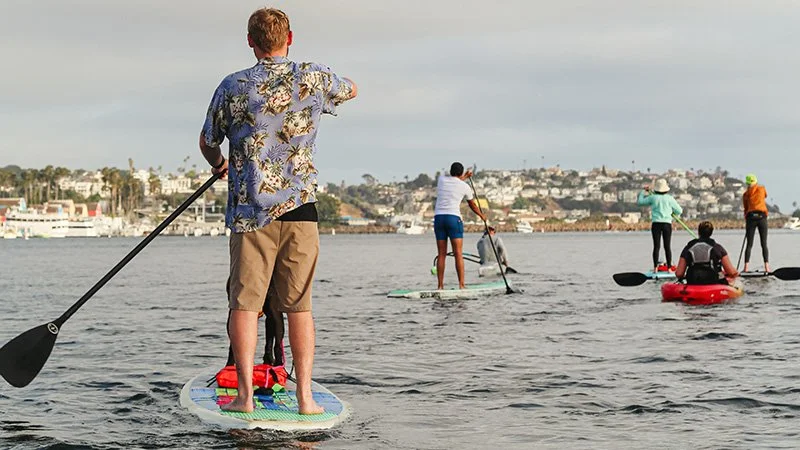
Boards are on the sand. Paddles are within reach. The water is calm, waiting for the next set of footprints to cross from shoreline to harbor.
If your body is asking for joint-friendly movement, your mind is asking for clarity, and your schedule needs something sustainable, the research points in a simple direction:
Life is better on the water.
Come let Marina del Rey shape your movement, one harbor session at a time.
TLDR Quick Overview: Flat-water stand up paddleboarding (SUP) and kayaking at Mother’s Beach, Marina del Rey combine low-impact movement with real cardiovascular and core benefits. Research on novice SUP training shows meaningful improvements in aerobic fitness and trunk endurance over a structured six-week schedule, while the calm, protected harbor setting makes it easier to focus on technique, comfort, and repeatable routines.
What this article covers:
Why flat-water paddling can support sustainable fitness (cardio + core)
How SUP and kayaking fit on the intensity scale (METs)
Why technique matters for shoulders and efficiency
How marina “blue space” can support mental reset and focus
How to turn paddling into a weekly habit in Marina del Rey
Who this is for: beginners, returning exercisers, joint-sensitive movers, families, and anyone looking for a great workout with their paddleboard rentals in Marina del Rey or a kayak rental at Mother’s Beach with a calmer learning curve.
-
Flat-water paddling combines cardiovascular loading with low joint impact. Because the movement avoids repetitive pounding while still engaging large muscle groups, many people find it easier to repeat week after week without soreness or dread.
-
Yes. Research on novice stand-up paddleboarders showed significant improvements in aerobic capacity over a six-week program when participants paddled several times per week on calm water.
-
Recreational flat-water SUP generally falls into the moderate intensity range, with higher-effort touring paddling reaching vigorous levels. This places it in a similar cardiovascular category to brisk walking, rowing, or light jogging.
-
Because the board is unstable. Every stroke introduces small balance challenges that require continuous engagement from the trunk, hips, and lower body. Over time, those micro-adjustments build measurable core endurance.
-
It can if technique relies too heavily on the arms. Research shows that experienced paddlers generate power from the hips and trunk, using the arms as connectors. This distributes load more safely across the body.
-
Kayaking supports the body in a seated position while still providing upper-body and trunk engagement. Like SUP, it delivers cardiovascular benefits with minimal joint impact, making it accessible for many people returning to movement.
-
For adults experiencing balance decline, practicing on calm water can train the nervous system through constant, low-level corrections. Studies suggest these adaptations can carry over to improved balance on land.
-
Harbors and other “blue spaces” reduce sensory overload while providing rhythmic movement and calming visual input. Research links these environments to lower stress markers, improved mood, and cognitive restoration.
-
Many studies and real-world programs use two to three sessions per week, 45–60 minutes each. Consistency matters more than intensity when building long-term cardiovascular and core adaptations.
-
Beginners, joint-sensitive movers, adults returning from inactivity, and anyone seeking a sustainable combination of cardio, strength, balance, and mental reset tend to benefit most from calm-water paddling.
Researched and created by Coral Hine through a human-guided, Authentic AI Systems to help you explore the benefits of calm-water movement and deepen your connection to the Marina del Rey community.
